Anxiety: Social Anxiety Disorder

By: Charleene Polanco

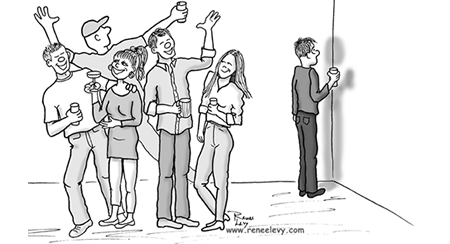
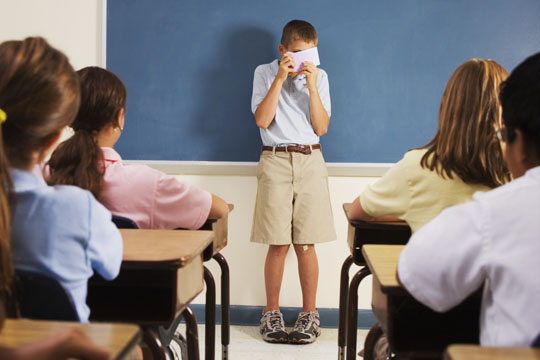
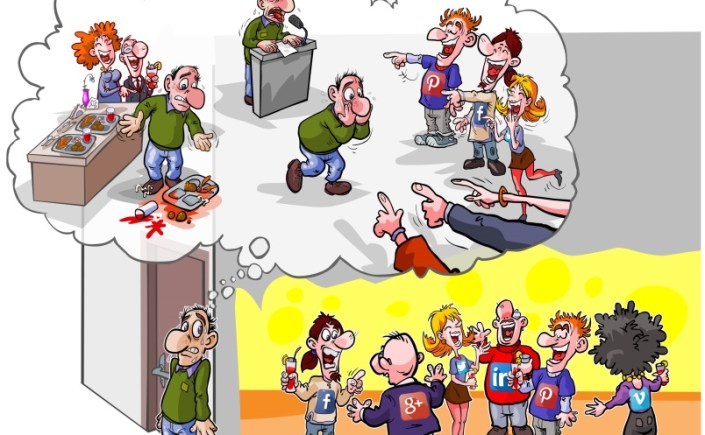
Social anxiety disorder is characterized by an intense fear of being rejected by people. Many people feel some level of anxiety when they are placed into unknown social situations. However, those suffering from social anxiety disorder may avoid socializing altogether, because they cannot handle being judged or seen in a negative way by others. A person with social anxiety disorder, can experience anxiety during many different situations like; going on a date, eating in front of people, making eye contact, public speaking, or going to parties. Some of the symptoms of social anxiety include:

  • Rapid heartbeat
  • Uneasy stomach/diarrhea
  • Muscle tension
  • Lightheadedness
  • Sweating

Social anxiety can cripple a person’s life, because normal everyday interactions are triggers of anxiety and discomfort. This is why many people who suffer from social anxiety disorder choose to isolate themselves from everyone. In order to reduce the fear of rejection, people with social anxiety disorder are encouraged to be exposed to social situations, not run away from them. Although being around others is what brings them distress, socializing is also what allows people with social anxiety to change the way they think about social engagements. Instead of having negative perceptions about the way people view them, the more they socialize and are accepted by others, the more socially anxious people see that those perceptions are not true.

If you or someone you know is suffering from social anxiety, please contact our psychotherapy offices in New York or New Jersey to talk to one of our licensed professional psychologists, psychiatrists, psychiatric nurse practitioners, or psychotherapists at Arista Counseling & Psychotherapy. Contact our Paramus, NJ or Manhattan, NY offices respectively, at (201) 368-3700 or (212) 722-1920 to set up an appointment. For more information, please visit http://www.counselingpsychotherapynjny.com/.

Sources:

Anxiety and Depression Association of America. (2018). Social Anxiety Disorder. Retrieved October 01, 2018, from https://adaa.org/understanding-anxiety/social-anxiety-disorder

Nordqvist, C. (2018, February 05). What’s to Know About Social Anxiety Disorder? Retrieved October 01, 2018, from https://www.medicalnewstoday.com/articles/176891.php

WebMD. (2018). What Is Social Anxiety Disorder? Retrieved October 01, 2018, from https://www.webmd.com/anxiety-panic/guide/mental-health-social-anxiety-disorder#1


Panic Attacks and Anxiety

By: Dianna Gomez

Panic. Worry. Fear. Helplessness. What is wrong with me? Why am I feeling like this? Why is my heart beating out of my chest? Am I dying? Why can’t I make it stop?!

For some of us, these emotions are all too familiar. Anxiety can be a scary thing, especially when you’re not totally up-to-date on what exactly it is. What are you to do when you feel like your whole world is crashing down around you and there’s nothing you can do to stop it? Well, have no fear because I have a few helpful tips to share!


Here are 5 things that you can do to calm yourself down when suffering from an anxiety attack:

  • Take Deep Breathes

Inhale. Exhale. Tell yourself that although it may not feel like it right now, everything will be okay.

  •  Talk Yourself Down

Repeat a calming/kind phrase to yourself OUT LOUD. Remind yourself that you are safe, loved, and never alone.

  • Seek Help

Sometimes we tend to insist that we can get through tough times all on our own, but there is no shame in asking for help. Whether it be a neutral professional, a loved one or someone you trust, find someone with whom you can talk out your troubles.

  • Use Music and Visuals

Never underestimate the power of calming music and visuals. Whether it be classical music, peaceful nature videos/sounds, or your favorite John Mayer song – let the music play and your worries float away!

  • Put Your Anxiety on Ice

Create sensory stimulation by gently sticking both of your hands into a bowl of very cold water with ice. The more ice the better.


If either you or anybody you know suffers from anxiety, the licensed psychologists, psychiatrists, psychiatric nurse practitioners, and psychotherapists at Arista Counseling & Psychotherapy can help you. Contact our Paramus, NJ or Manhattan, NY offices respectively, at (201)-368-3700 or (212)-722-1920 to set up an appointment. For more information, visit us at https://www.counselingpsychotherapynjny.com/.


Social Anxiety and College: How to Cope This Semester

By Samantha Glosser

College is a stressful time for most students and it can quite often seem too difficult to cope with the pressures commonly found on college campuses. For someone with social anxiety, a disorder characterized by persistent fear of negative evaluation by others in social situations, this reality is all too real. They are faced with public speaking, graded class participation, and the anxiety of interacting with other students in clubs, organizations, and even at parties. And don’t forget the terror of meeting your new roommate! Being completely emerged in these situations makes it easy to feel like your social anxiety is inhibiting you in all aspects of your college life; however, this does not need to be the case.

There are plenty of things you can do to treat your social anxiety before it gets in the way of your college experience. For some, self-help techniques are useful. Participating in deep breathing exercises and positive self-talk are such techniques. Deep breathing helps to alleviate some of the physical symptoms of social anxiety, while positive self-talk can lessen the effect that anxiety has on negative thoughts. However, others benefit from psychotherapy, such as cognitive behavioral therapy, or medications (antidepressants) targeted for social anxiety. This treatment plan typically includes exposure therapy, which gradually places you in anxiety-provoking situations while simultaneously teaching you relaxation skills to cope with your anxiety. It can help you to understand the irrational basis of your worries. A combination of psychotherapy, medication, and at home self-help strategies are an effective way to prevent your social anxiety from taking over your college experience.

If you or someone you know appears to be suffering from social anxiety disorder, the licensed psychologists, psychiatrists, psychiatric nurse practitioners, and psychotherapists at Arista Counseling & Psychotherapy can assist you. Contact our Paramus, NJ or Manhattan, NY offices respectively, at (201) 368-3700 or (212) 722-1920 to set up an appointment. For more information, visit http://www.counselingpsychotherapynjny.com/

Social Anxiety Disorder

Signs and Symptoms of Social Anxiety Disorder:

By: Cassie Sieradzky

Social anxiety disorder is characterized by severe anxiety and excessive self-consciousness in everyday social situations. An individual with social anxiety disorder may have a persistent, intense, and chronic fear of being watched and judged by others, which can interfere with their daily functioning. Social anxiety disorder can be limited to only one type of situation, such as a fear of speaking or performing in public, or whenever an individual is around other people. The feared situation is avoided or endured with extreme anxiety and distress. In addition, they often experience low self-esteem and depression and have a hard time making or keeping friends.

Physical symptoms such as blushing, profuse sweating, upset stomach, and trembling often accompany the intense stress of social anxiety disorder. These visible symptoms intensify the fear of disapproval and often become an additional focus of fear. As people with social anxiety disorder worry about experiencing the physical symptoms, the greater their chances are of developing them.

About seven percent of the U.S. population is estimated to have social anxiety disorder within a 12-month period. Social anxiety disorder occurs twice as often in women than men and typically begins in childhood or early adolescence. Social anxiety disorder often runs in families and may be comorbid with depression or other anxiety disorders, such as panic disorder or obsessive-compulsive disorder. It is not uncommon for individuals with social anxiety disorder to self-medicate with alcohol or other drugs, which can lead to addiction.

Cognitive-behavioral therapy is a form of psychotherapy that is very effective in treating social anxiety. CBT and behavioral therapy are used to reduce anxiety by managing negative beliefs or behaviors that help maintain the disorder. Medications, in conjunction with psychotherapy, can also play a role in treatment.

If you or a loved one appears to be suffering from social anxiety disorder, licensed psychologists, psychiatrists, psychiatric nurse practitioners, and psychotherapists at Arista Counseling & Psychotherapy can assist you. Contact our Paramus, NJ or Manhattan, NY offices respectively, at (201) 368-3700 or (212) 722-1920 to set up an appointment. For more information, visit http://www.counselingpsychotherapynjny.com/

Social Anxiety Disorder (Social Phobia). (n.d.). Retrieved March 26, 2018, from https://www.psychologytoday.com/us/conditions/social-anxiety-disorder-social-phobia