Insomnia & The Digital Age  

Insomnia & The Digital Age  By: Nicole Sanchez

Insomnia is a sleep disorder in which one may find it difficult to fall asleep, stay asleep, or both, even if one has ample time for restful sleep. With insomnia one may experience disruptions that impair the quality of one’s sleep which in turn may cause sleepiness during the day. Short term insomnia, may occur as a result of stress or may be due to certain changes in one’s schedule or environment. Short term insomnia can last for a few days or weeks. Chronic or long-term insomnia occurs at least 3 nights a week, persists longer than 3 months, and does not have another health issue that could be a root cause. Furthermore, due to technological advancements and the rise in media, there has been a particular increase in insomnia among individuals. Digital activity, especially increased screen time, disturbs a person’s sleep quality because screens emit blue light which suppress the production of melatonin, a hormone that induces sleepiness. Viewing overstimulating content before bedtime also makes it more difficult to fall asleep, thus, reducing the time that’s usually reserved for sleep.   

Chronic insomnia affects around 15 to 35 percent of adults, so it’s critical to focus on reducing the symptoms and allowing individuals to improve their sleep quality. Researchers believe cognitive behavioral therapy for insomnia (CBT-I) to be the most successful initial treatment for chronic insomnia. Through CBT-I individuals learn to reconstruct the feelings, thoughts and behaviors that are causing insomnia. Hypnotherapy is a method that can be used to help those suffering with insomnia as it helps to induce sleep and places individuals into a relaxed, trance-like state so they can let go of any anxiety.

If you or someone you know is having mental health difficulties and/ or insomnia, please contact our psychotherapy offices in New Jersey to talk to one of our licensed professional psychologists, psychiatrists, psychiatric nurse practitioners, or psychotherapists at Arista Counseling & Psychotherapy. Contact our offices at (201) 368-3700 or (212) 722-1920 to set up an appointment. For more information, please visit http://www.counselingpsychotherapynjny.com/

https://www.mayoclinic.org/diseases-conditions/insomnia/symptoms-causes/syc-20355167

https://www.webmd.com/sleep-disorders/insomnia-symptoms-and-causes

https://my.clevelandclinic.org/health/diseases/12119-insomnia

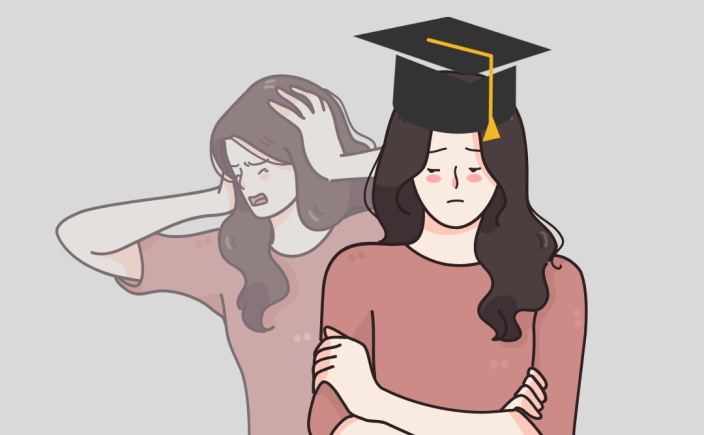
Post-Grad Depression

Depression/Post-College

By: Ingrid Guevara

Everyone knows and acknowledges that depression during college occurs. Statistics show that twenty-seven percent of college students had been diagnosed with depression and twenty-three percent said that depression impacted their academic performance negatively.  When it comes to post-grad students research shows that around twenty percent of student graduating experience depression. Post-grad depression is seen as situational depression. Situational depression is depression caused by a stressful or traumatic event. Post-Grad depression is caused by; pressure of finding a job, moving back in with parents, feeling a failure to launch, changes in friendships (friends scattering, not seeing them), student debt, comparison with friends and being overwhelmed by next steps and changes. Signs of post-grad depression are; lack of motivation, feeling worthless or guilty, loneliness, overwhelm (especially related to the next steps), feeling sad or down, isolation or wanting to isolate oneself, not enjoying activities that were previously enjoyed, poor sleep, appetite change, lower than usual frustration tolerance, feeling sluggish or super jittery and intense fear or expectation things will not go well in the future. Post-grad depression like any depression can really hinder your life so seeking help is suggested in order to properly cope with it. It is also suggested; avoiding comparing yourself with others, practice self-kindness and self-love, reach out to friends,  get some exercise/movement, don’t be too hard on yourself, recognize that transitions are difficult, find a support group/networking group, take care of yourself and confide in trusted family and friends. Depression is common when life is stressful and one feels pressure therefore, it is okay because always remember you are not alone.

If you or someone you know is struggling with their mental health, please contact our psychotherapy offices in New York or New Jersey to talk to one of our licensed professional psychologists, psychiatrists, psychiatric nurse practitioners, or psychotherapists at Arista Counseling & Psychotherapy. Contact our Paramus, NJ or Manhattan, NY offices respectively, at (201) 368-3700 or (212) 722-1920 to set up an appointment. For more information, please visit http://www.counselingpsychotherapynjny.com/

References

https://www.ncbi.nlm.nih.gov/pmc/articles/PMC9091131/

Emotionally Abusive Relationship: How to Spot the Signs

Emotionally Abusive Relationship: How to Spot the Signs

By Erika Ortiz

Abuse of any kind must never be tolerated. Whether it is from your boss, spouse, family member, or friend, it should not be taken lightly and must be acted upon quickly before it can escalate to serious issues. However, some forms of abuse are difficult to distinguish and can be especially hard to come to terms with when the abuser is a significant other such as a spouse or boyfriend/girlfriend. Physical abuse is a well-known form of abuse; however, emotional abuse has a subtle component, making it very tricky to catch. Here are some signs that you are in an emotionally abusive relationship:

Controlling and manipulative- Your partner may make you feel bad for going out or give you a curfew when you’re out with friends.

Gaslighting- Your partner can make you believe points in their arguments or things you have “said” that never happened.

Humiliation and embarrassment- They may insult you, make fun, and make you feel bad about yourself in front of others.

Silent treatment/Stonewalling- After an argument, they may “shut down” to make you feel abandoned and cut communication.

Threats- They may flat-out threaten you in any way, shape, or form possible.

There is quite a lengthy list of signs of emotional abuse. However, it is crucial to be proactive and seek help. These issues can cause or result in depression, anxiety, suicide, and PTSD. It can even lead to physical abuse if it hasn’t already occurred. Please seek professional help immediately if you see any signs of abuse or feel unsafe or unwell.

If you or someone you know is experiencing an emotionally abusive relationship or signs of it, please contact our psychotherapy offices in New York or New Jersey to talk to one of our licensed professional psychologists, psychiatrists, psychiatric nurse practitioners, or psychotherapists at Arista Counseling & Psychotherapy. Contact our Paramus, NJ or Manhattan, NY offices respectively at (201) 368-3700 or (212) 722-1920 to set up an appointment. For more information, please visit https://www.counselingpsychotherapynjny.com

 Sources

https://www.webmd.com/sex-relationships/signs-emotionally-abusive-relationship

https://www.healthline.com/health/signs-of-mental-abuse#control-and-shame

Eating Disorders: How To Catch Them in Your Loved Ones

Eating Disorders: How To Catch Them in Your Loved Ones

By Emily Ferrer

Eating disorders are characterized by severe and persistent troubles related to eating behaviors, food, and weight[1]. There are many different types of eating disorders; however, the most common are anorexia nervosa, bulimia nervosa, and binge eating disorder. Nine percent of the entire population suffers from an eating disorder and 10,200 deaths are recorded each year due to an eating disorder[2]. After reading about how common they are, I am sure you are wondering, “How do I know if I or someone I know has an eating disorder?” There are many signs and symptoms associated with eating disorders[3]:

Anorexia Nervosa:

  • Extreme weight loss
  • Muscle weakness
  • Bone weakness
  • Amenorrhea
  • Brittle hair/nails
  • Always feeling cold
  • Obsession with food
  • Depression

Bulimia Nervosa:

  • Frequent trips to the bathroom after a meal
  • Chronic sore throat
  • Dental decay
  • Laxative/diuretic misuse
  • Large amounts of food disappearing
  • Fainting from excessive purging

Binge-Eating Disorder:

  • Weight gain
  • Eating very rapidly
  • Eating until very full
  • Eating even when not hungry
  • Hiding large amounts of food
  • Eating alone on purpose
  • Feeling guilty after eating large amounts of food

Eating disorders can be extremely serious if not treated. It is important to stay informed about the signs and symptoms of different eating disorders so you can find help for you or someone you know as soon as possible. Other general signs of eating disorders to look out for are a sudden obsession with food (cooking it, eating it, watching cooking shows/videos), social withdrawal, drastic changes in mood, new attitudes towards food, new dieting habits, self-harm, excessive exercise, obsession with calorie and step count, repeatedly weighing themselves, and body dysmorphia[4]

If you or someone you know is struggling with an eating disorder, please contact our psychotherapy offices in New York or New Jersey to talk to one of our licensed professional psychologists, psychiatrists, psychiatric nurse practitioners, or psychotherapists at Arista Counseling & Psychotherapy. Contact our Paramus, NJ or Manhattan, NY offices respectively, at (201) 368-3700 or (212) 722-1920 to set up an appointment. For more information, please visit http://www.counselingpsychotherapynjny.com


Sources:

[1] https://psychiatry.org/patients-families/eating-disorders/what-are-eating-disorders

[2] https://anad.org/eating-disorders-statistics/

[3] https://psychiatry.org/patients-families/eating-disorders/what-are-eating-disorders

[4] https://www.lifeworkscommunity.com/eating-disorders-treatment/how-to-recognise-the-early-signs-of-an-eating-disorder

Body Dysmorphia: How TikTok Impacts Self Image

Body Dysmorphia: How TikTok Impacts Self Image

By Erika Ortiz

            A new social media app called TikTok emerged and swept generations because of its easy use, likability, and relatability created by other users or creators. TikTok is used like a break from stressors in life since it can have a variety of entertaining and funny videos. The TikTok algorithm determines your perception and how you choose to “respond” to each video or comment you see and scroll past. TikTok has tons of videos, from cute cat videos to funny skits, serious world news, and even tips or “how to” for your everyday life. Since TikTok has gained massive popularity, it can be strikingly influential.  TikTok can also instill some negativity in your life.  Many videos go viral for the wrong reasons and are taken to a dangerous extremity. One type of TikTok video that always goes viral is known as, “What I eat in a day”. The creator documents all their meals throughout the day and some even calculate their calorie intake. Some creators claim it is to promote a “healthy lifestyle”, while others say it is solely because these types of videos happen to go viral and do well with their audience. Regardless, these kinds of videos seem to inflict the idea of having body dysmorphia or, ironically enough, an unhealthy eating style. Body dysmorphia or body dysmorphic disorder is a mental health condition in which people hyper-focus on their flaws and appearances to the point where they will never be “good enough” in their own eyes. Some of these videos show the over consumption of food, too few nutrients in each meal, or sometimes, too much food, and too much sugar and/or greasy foods. These videos have an alarming comment section. Users will comment something to the degree of, “Wow I eat too much”, or, “Maybe I should skip a meal or two.” As you scroll through these TikToks and come across a “What I eat in a day” or a video that promotes an unhealthy body image that makes you feel uncomfortable and/or negative about yourself, press report for “harmful activities”, then press the “not interested” option at the bottom right. Even if you do not necessarily feel that way, others still might, so it is best to do your part in preventing the spread or glorification of unhealthy lifestyles.

If you or someone you know is experiencing body dysmorphia and/or signs of an eating disorder, please contact our psychotherapy offices in New York or New Jersey to talk to one of our licensed professional psychologists, psychiatrists, psychiatric nurse practitioners, or psychotherapists at Arista Counseling & Psychotherapy. Contact our Paramus, NJ or Manhattan, NY offices respectively at (201) 368-3700 or (212) 722-1920 to set up an appointment. For more information, please visit https://www.counselingpsychotherapynjny.com

Eating Disorders: Recognizing Signs in Others

Eating Disorders: Recognizing Signs in Others

By Kim Simone

Warning Signs of Eating Disorders

Signs of eating disorders oftentimes go unrecognized by those around the struggling individual. While eating disorders such as anorexia nervosa, bulimia nervosa, and binge eating disorder each have their own risks, it is critical to know that they can be fatal if left untreated for a certain period of time. Fortunately, eating disorders can be treated by mental health care providers. Supportively encouraging an individual struggling with an eating disorder to seek treatment can save their life.

Warning signs may include but are not limited to:

Behavioral Signs:

  • Skipping meals
  • Withdrawal from friends and activities
  • Refusal to eat certain foods
  • Expressing preoccupation with food, weight, nutrition, etc.
  • Consuming only small portions of food at a time

Emotional Signs:

  • Extreme concern with body shape and size
  • Extreme mood swings

Physical Signs:

  • Noticeable fluctuations in weight
  • Dizziness and fainting
  • Feeling cold regularly
  • Difficulties concentrating
  • Stomach cramps and other gastrointestinal issues

Seeking Treatment

It is important to seek help as soon as warning signs appear given that the chance for recovery from an eating disorder increases the earlier it is detected, diagnosed, and treated. Cognitive Behavioral Therapy (CBT) is a commonly used psychotherapeutic approach for eating disorder treatment. It emphasizes the interaction between an individual’s thoughts, feelings, and behaviors. The approach is centered on shifting negative thoughts and behaviors to more positive thoughts and healthier alternatives.

The treatment for different eating disorders such as anorexia nervosa, bulimia nervosa, and binge eating disorder vary. During treatment, a mental health care provider can screen and treat for other underlying issues, such as anxiety and depression, as these can influence treatment outcomes. Medications can be an effective treatment option when combined with psychotherapy in treating individuals struggling with an eating disorder. Supportively encouraging an individual to seek treatment for an eating disorder can be lifesaving.

If you or someone you know is struggling with an eating disorder, please contact our psychotherapy offices in New York or New Jersey to talk to one of our licensed professional psychologists, psychiatrists, psychiatric nurse practitioners, or psychotherapists at Arista Counseling & Psychotherapy. Contact our Paramus, NJ or Manhattan, NY offices respectively, at (201) 368-3700 or (212) 722-1920 to set up an appointment. For more information, please visit http://www.counselingpsychotherapynjny.com.

Sources:

Warning Signs And Symptoms

https://www.yourhealthinmind.org/mental-illnesses-disorders/eating-disorders/treatment

Image Source:

https://integrativelifecenter.com/how-diet-culture-influences-eating-disorders/

Body Image: The Role of Body Dissatisfaction on Self-Esteem

Body Image: The Role of Body Dissatisfaction on Self-Esteem

By Kim Simone

Body dissatisfaction is characterized by an individual’s persistent negative thoughts and feelings about his or her body. It is commonly influenced by external factors such as societal norms and perceived pressure from other individuals. High levels of body dissatisfaction can lead to low self-esteem and ultimately lead to harmful eating and exercising behaviors.

On the contrary, having a positive body image is associated with self-acceptance, higher self-esteem, and having healthier practices in regards to eating and exercising.

The Four Primary Elements of Body Image:

  1. Perceptual body image:  the way you see your body
  2. Cognitive body image:  the way you think about your body
  3. Affective body image: the way you feel about your body (often characterized by satisfaction or dissatisfaction)
  4. Behavioral body image: the behaviors you engage in as a result of your body image (may include unhealthy eating behaviors and exercising habits)

Body dissatisfaction fluctuates throughout the lifespan and is correlated with lower levels of self-esteem. These concerns are linked with poor self-concept, which not only affects physical and mental health, but also impacts individuals socially and academically. Since body dissatisfaction often leads to low self-esteem, individuals may be at risk for developing more serious disorders. A poor self-concept, and consequently a poor body image, may influence eating behaviors, making individuals more at risk for developing an eating disorder.

Given that the chance for recovery from an eating disorder increases the earlier it is detected, diagnosed, and treated, it is important to seek help as soon as warning signs appear. Cognitive Behavioral Therapy (CBT) is a commonly used psychotherapeutic approach for eating disorder treatment. The approach emphasizes having the individual understand the interaction and inter relatedness between his or her thoughts, feelings, and behaviors. This therapy focuses on shifting negative thoughts and behaviors to more positive thoughts and healthier alternatives. Furthermore, a mental health care provider can screen and treat for other underlying issues, such as anxiety and depression, as these can influence treatment outcomes.  

If you or someone you know is struggling with body dissatisfaction, self-esteem, and/or eating disorders, please contact our psychotherapy offices in New York or New Jersey to talk to one of our licensed professional psychologists, psychiatrists, psychiatric nurse practitioners, or psychotherapists at Arista Counseling & Psychotherapy. Contact our Paramus, NJ or Manhattan, NY offices respectively, at (201) 368-3700 or (212) 722-1920 to set up an appointment. For more information, please visit http://www.counselingpsychotherapynjny.com/

Sources:

https://nedc.com.au/eating-disorders/eating-disorders-explained/body-image/

https://psycnet.apa.org/record/2012-14627-021

https://www.waldenu.edu/online-masters-programs/ms-in-clinical-mental-health-counseling/resource/what-is-body-dissatisfaction-and-how-does-it-lead-to-eating-disorders

Image Source:

https://img.huffingtonpost.com/asset/5bb5f917210000d501c88483.jpeg?ops=scalefit_720_noupscale&format=webp

Body Dysmorphic Disorder-Beautiful In Your Own Skin Month

Body Dysmorphic Disorder-Beautiful In Your Own Skin Month

By Fiona McDermut

            In light of the start of “beautiful in your own skin” month, it is important to recognize that many struggle with body image satisfaction. Not all people look in the mirror and feel content with what they see. Even if those around you do not understand your body-related concerns, your feelings are totally valid and can be helped with treatment.

            Body dysmorphic disorder (body dysmorphia) is a mental illness characterized by a hyper fixation on perceived defects in one’s appearance. This interferes with day-to-day life because one may spend a large amount of time worrying or attempting to adjust the perceived flaw. These behaviors usually result in obsessive body comparison to others, avoidance of social interaction, and frequent negative body-checking (looking in the mirror repeatedly at disliked body parts). Unfortunately, many have associated their own happiness with how closely their bodies align with current beauty standards portrayed in the media. As one lets these thoughts progress, they can worsen, and possibly be a precursor to an eating disorder or other disorders associated with body dissatisfaction such as depression and obsessive compulsive disorder.

            While many believe that cosmetic surgery will fix their perceived flaws, research has shown that such surgeries do not improve psychological symptoms of body dysmorphic disorder. The first step to resolving the issue is recognizing that you have a warped view of what you look like. If you or someone you know experiences this, it can be very beneficial to seek psychological/psychiatric assistance. Professionals in the field will be able to decide the best way to treat these disordered thoughts. The most common treatment for body dysmorphia is cognitive behavioral therapy (CBT). Other possible treatments include hypnotherapy, exposure therapy, acceptance and commitment therapy (ACT), and the prescription of antidepressant medication in order to decrease the feelings of dissatisfaction.

            Working with a professional is important in situations like these, but it is still important to remind yourself that your perceived flaws are only noticed by you, and likely not those around you. Nobody is perfect, but with the constant pressure of modern media to be thin, our flaws often appear to be more apparent to ourselves than they are to others. The practice of mindfulness exercises may also help to focus your mind on what you have learned to love about yourself, and of course, do not be afraid to seek help when necessary.

If you or someone you know is struggling with body dysmorphic disorder, please contact our psychotherapy offices in New York or New Jersey to talk to one of our licensed professional psychologists, psychiatrists, psychiatric nurse practitioners, or psychotherapists at Arista Counseling & Psychotherapy. Contact our Paramus, NJ or Manhattan, NY offices respectively, at (201) 368-3700 or (212) 722-1920 to set up an appointment. For more information, please visit http://www.counselingpsychotherapynjny.com/

Sources:

https://www.psychologytoday.com/us/blog/the-couch/201507/whats-the-best-way-deal-negative-body-image

https://www.psychologytoday.com/us/blog/shrink/201409/how-stop-hating-your-body

https://www.sciencedirect.com/science/article/abs/pii/S1740144507000988

Image source: https://www.additudemag.com/adhd-related-body-dysmorphic-disorder/

Relationships; How to Recognize a Toxic Relationship

Relationships; How to Recognize a Toxic Relationship

By: Priya Desai

A toxic relationship can be hard to identify, especially when you are in the relationship. There are many instances where the people closest to you will notice first that the relationship you are in is not good for you. Here are signs of a toxic relationship that can help you identify if you are in one.

Signs of a toxic relationship:

  • Lack of trust

When you are in a relationship, both partners should have trust in each other. Trust varies from being loyal to your partner to trusting that they have the best interest in their mind when they are thinking about the relationship. Trust is the foundation of a relationship and without it, it can’t work.

  • Hostile communication

Hostile communication includes verbal abuse and physical abuse. This can be name calling, yelling, constant interruption, or throwing and breaking things.

  • Controlling behaviors

Your partner has no right to control your actions or beliefs. This can include telling you what’s right, secluding you from your closest friends/family, and requiring access to your personal social media accounts and phone.

  • All take, no give

If you feel as if your partner is not doing anything for you, but you are consistently taking orders from him/her, this is another big red flag. This includes always being the first one to text and always being the one to make plans to hang out with your partner. The feelings should be reciprocated all the time.

If you or someone you know is in a toxic relationship, please contact our psychotherapy offices in New York or New Jersey to talk to one of our licensed professional psychologists, psychiatrists, psychiatric nurse practitioners, or psychotherapists at Arista Counseling & Psychotherapy. Contact our Paramus, NJ or Manhattan, NY offices respectively, at (201) 368-3700 or (212) 722-1920 to set up an appointment. For more information, please visit http://www.counselingpsychotherapynjny.com/

Citation: https://www.insider.com/toxic-relationship

https://www.healthline.com/health/toxic-relationship

Image Citation : https://www.google.com/search?q=toxic+relationship&sxsrf=AOaemvK-hHlQGKKmgsC6m_XxK_UptZleNA:1631133605274&source=lnms&tbm=isch&sa=X&sqi=2&ved=2ahUKEwjX3_2YnvDyAhUaQfEDHao0DBMQ_AUoAXoECAEQAw&biw=794&bih=639#imgrc=TKmtKNeDMzkEOM

Procrastinating before bed? This might be why

By Katie Weinstein

Revenge bedtime procrastination is defined as the decision to sacrifice sleep for leisure activities. The reason it is called “revenge” bedtime procrastination is to get back at the day time hours for stealing away free time. Many people are tired when going to bed and intend to go to sleep, but chose to binge shows on Netflix or scroll through hours of Tik Toks without an external reason to stay awake, meaning there is an intention-behavior gap. 

Since revenge bedtime procrastination is still a relatively new idea in sleep science, the underlying psychology explaining this phenomenon is still being debated. One explanation is that daytime workload depletes our capacity for self-control, so we can’t fight our urge to stay awake to participate in leisure activities even though it means we will be better rested for the next day. Another explanation might be that some people are naturally “night owls” and are forced to adapt to an early schedule, so this is their way of finding time to recover from stress. A third explanation might be that, during the pandemic, domestic and work lives are blurred as people work overtime hours and do not divide work time from leisure time. 

The reason that it is important to be aware of revenge bedtime procrastination is because sleep is essential for our physical and mental health. Sleep deprivation can cause daytime sleepiness, which harms productivity, thinking, and memory as well causing physical effects such as insufficient immune function and increased susceptibility to cardiovascular disease and diabetes. 

In order to prevent revenge bedtime procrastination, try putting away technology 30 minutes before bed, create a regular bedtime routine, avoid caffeine late in the afternoon, and find time for leisure activities during the day. It is also important to recognize when you need help managing your procrastination and your sleep problems.

If you or someone you know is struggling with revenge bedtime procrastination or other types of sleep problems, please contact our psychotherapy offices in New York or New Jersey to talk to one of our licensed professional psychologists, psychiatrists, psychiatric nurse practitioners, or psychotherapists at Arista Counseling & Psychotherapy. Contact our Paramus, NJ or Manhattan, NY offices respectively, at (201) 368-3700 or (212) 722-1920 to set up an appointment. For more information, please visit http://www.counselingpsychotherapynjny.com/

What Is “Revenge Bedtime Procrastination”?

https://www.medicalnewstoday.com/articles/revenge-bedtime-procrastination-a-plight-of-our-times#Tips-for-better-sleep