Advice for Dementia: Support for Caregivers

By Dara Kushnir

Caring for someone with dementia can be demanding and mentally exhausting, but it is also important to maintain and strengthen your relationship. Individuals with dementia experience memory problems, impaired judgment, difficulty communicating, and confused thinking more severe than normal aging. In the most severe stage, they are completely dependent on others for even their basic needs, such as hygiene and food. Therefore, finding ways to handle the challenges caregivers often face is essential so both you as a caregiver and the person who has dementia enjoy spending time together.

  1. Know your limits – As much as you want to be able to manage everything, you are only one person. Remember to focus on what’s important and don’t be too hard on yourself about things you can’t manage. Taking breaks allows you to reflect and relax.
  2. Coping with changes – It can be difficult to see the person you care for struggling with things they used to be able to do. It is important to focus on what they can do and support these things rather than what they can’t do.
  3. Address difficult emotions – you may feel isolated, angry, frustrated, or even guilty with your situation. These are very common reactions when caring for someone with dementia and should not make you feel shame. Figuring out how to deal with these feelings is vital though, because they can have a negative impact on your wellbeing as well as the wellbeing of the recipient of your care. Just being there and caring for your loved one helps them immensely.
  4. Be in the moment – Acceptance is a reoccurring, crucial part of caring for a person with dementia. Those with significant memory loss may not be able to discuss things they used to do or participate in certain activities. They can still enjoy things directly in front of them such as looking at photographs and playing simple games, and your company.
  5. Ask for help – Don’t be afraid to ask for help and support. Involving family and friends or voluntary organizations can provide you with support and reduce your stress. It may also help to talk about dementia to others to help them understand what you are doing and suggest ways others can help.

Source: https://www.alzheimers.org.uk/get-support/help-dementia-care/caring-for-person-dementia
https://www.psychologytoday.com/us/blog/managing-your-memory/201812/seek-joy-when-caring-those-dementia
https://www.psychologytoday.com/us/blog/managing-your-memory/201811/8-principles-communicating-people-dementia
(image) https://www.insights.uca.org.au/features/changing-the-way-we-talk-about-dementia

If you or someone you know needs help coping with the dementia of a family member, please contact our psychotherapy offices in New York or New Jersey to talk to one of our licensed professional psychologists, psychiatrists, psychiatric nurse practitioners, or psychotherapists at Arista Counseling & Psychotherapy. Contact our Paramus, NJ or Manhattan, NY offices respectively, at (201) 368-3700 or (212) 722-1920 to set up an appointment. For more information, please visit http://www.counselingpsychotherapynjny.com/.

Ever Feel Like a Fraud?

By: Stephanie Osuba

Despite your degrees, acclaims, and accomplishments, do you ever sometimes feel like you are an imposter? That you’ve been getting lucky or that you’re a fake in your profession and one day people are going to find you out? As it turns out, you aren’t alone. Many successful people feel this way and often have to step back and remember all the things they have achieved – Maya Angelou and Albert Einstein among these people! While there is no diagnosis or even proper name for this feeling in the DSM-5, there are countless of reports of this in psychology and psychotherapy literature. In fact, the first time the term “imposter syndrome” was used was in an article in 1978 by Drs Pauline R. Clance and Suzanne A. Imes who – after studying 150 educated, established, and highly respected women – found that they didn’t have an internal sense of success and found themselves to be “imposters.”

So what causes this “imposter syndrome” that befalls so many successful people? One reason could be that there is no real measure to success. There is always something more that you can do and regardless of how much success you’ve already had and you think you are content with, self-doubt can always creep in and say you haven’t done enough. Another reason could be “pluralistic ignorance,” which is believing something to be true without being able to prove or disprove it – usually involving unspoken or false beliefs about other people. For example, research has shown that all college students feel anxiety about school but the actual students think they are the only ones who feel that way and other people are having no trouble adjusting to college life. And lastly, talent can make us believe that we haven’t worked hard enough and don’t deserve the praise or success of what comes naturally to us.

Source: https://www.psychologytoday.com/us/blog/the-couch/201811/do-you-ever-feel-fraud 

If you or someone you know appears to be having issues with self-esteem or is suffering from anxiety, the licensed psychologists, psychiatrists, psychiatric nurse practitioners, and psychotherapists at Arista Counseling & Psychotherapy can assist you. Contact our Paramus, NJ or Manhattan, NY offices respectively, at (201) 368-3700 or (212) 722-1920 to set up an appointment. For more information, visit http://www.counselingpsychotherapynjny.com/

Bipolar Disorder: Cognitive Deficits of Which You May Not Be Aware

By Samantha Glosser

When you hear the term “bipolar disorder” your first thoughts are most likely about the cycle of elevated and depressed moods, of extreme highs and extreme lows. This is to be expected, as these states of mania and depression are hallmark features of bipolar disorder, and they are typically the symptoms highlighted by mainstream media. In mania, individuals exhibit symptoms of high energy, decreased need for sleep, feelings of euphoria, extreme irritability, and impulsivity. In a depressive state, individuals display symptoms of low energy, feelings of helplessness and hopelessness, avolition, and suicidal ideation.

Sometimes there can be more to bipolar disorder than just these symptoms. For some, after the onset of bipolar disorder symptoms, there is a marked decrease in cognitive capacity across a few different areas. Typical cognitive deficits reported with bipolar disorder include the following: difficulties with working memory, such as word retrieval, and executive functioning, such as problems with planning, prioritizing, and organizing behavior. Individuals also experience difficulties retaining information that was just presented to them and can even experience slowed thought processes. These adverse cognitive impacts appear at both polarities of mood. It is also important to distinguish between two types of cognitive deficits: mood-phase specific and enduring. Mood-phase specific cognitive deficits are typical to most individuals diagnosed with bipolar disorder, as these symptoms are only present during periods of mood intensity. Enduring deficits, on the other hand, will remain present even when an individual has sustained a period of partial remission or is at a baseline level of functioning (i.e., they are not experiencing mania or depression). Not everyone diagnosed with bipolar disorder experiences enduring cognitive deficits. Individuals with a history of higher acuity symptoms, as well as individuals with a history of treatment resistant symptoms, treatment non-compliance, and/or unhealthy lifestyle choices are more likely to suffer from enduring cognitive deficits.

If you or someone you know appears to be suffering from bipolar disorder, the licensed psychologists, psychiatrists, psychiatric nurse practitioners, and psychotherapists at Arista Counseling & Psychotherapy can assist you. Contact our Paramus, NJ or Manhattan, NY offices respectively, at (201) 368-3700 or (212) 722-1920 to set up an appointment. For more information, visit http://www.counselingpsychotherapynjny.com/


Source: https://www.psychologytoday.com/us/blog/bipolar-you/201412/cognitive-deficit-in-bipolar-disorder

Addiction

By: Dianna Gomez

It is more often than not assumed that a person addicted to a substance, whether it be drugs or alcohol, is someone with shallow morals, little motivation, and that if he or she really wanted to, they could simply stop using at any moment. These assumptions show how extremely misunderstood addiction is by our general public, as well as how infrequently this topic is discussed among us. Addiction is a chronic disease that affects a person’s brain chemistry, thoughts, and behaviors. An individual can initially fall into addiction through voluntarily substance use or through necessary use of prescription medication prescribed by a doctor (ex: pain medication for after a surgery). When addiction first begins, the substance affects the reward circuits in the brain which causes feelings of complete euphoria. If a person continues to use the substance, the brain adjusts itself and develops a “tolerance” for it, which causes the individual to not feel the effects of the drug as intensely as they did the first time the drug was taken. This requires the person to have to use a larger quantity of the substance in order to reach the same level of “high” they did before. There are many different ways an individual can naturally be more vulnerable to addiction throughout their lifetime. Two of these main ways include biology and environment.

Biology: the genetics a person is born with can affect up to 50% of their risk for becoming addicted to a substance. This includes factors such as gender, ethnicity, and an individual’s family mental health history.

Environment: the conditions in which an individual is brought up in such as their economic status, family/friends, and quality of life in general also plays a huge role in their vulnerability for addiction. Peer pressure, lack of parental guidance, traumatic experiences with abuse (physical, emotional, sexual) are a few examples of common environmental influences.

If either you or anybody you know suffers from substance abuse or addiction, the licensed psychologists, psychiatrists, psychiatric nurse practitioners, and psychotherapists at Arista Counseling & Psychotherapy can help you. Contact our Paramus, NJ or Manhattan, NY offices respectively, at (201)-368-3700 or (212)-722-1920 to set up an appointment. For more information, visit us at https://www.counselingpsychotherapynjny.com/.


Attention Deficit Hyperactivity Disorder

By: Estephani Diaz

The most commonly diagnosed disorder among children and young adolescents is ADHD, which stands for Attention Deficit Hyperactivity Disorder. Among adults, only 4% are diagnosed with this order. The most significant common symptoms for ADHD are: hyperactivity, inattention and impulsivity. Each symptom has their own signs that professionals look out for. For example:

Hyperactivity:

  • Talks excessively
  • Always on the go
  • Restlessness

Inattention:

  • Misses details
  • Easily distracted
  • Often forgetful

Impulsivity:

  • Tough time waiting
  • Interrupts others
  • Blurts out answers

Along with the symptoms listed above, problems with organization, time management, and controlling emotions are also pat of ADHD. Procrastination, isolation and difficulty concentrating are challenges people with ADHD may also face. It is also likely for them to have trouble with self-esteem, relationships and addiction. ADHD can cause a person to have problems at school and work as well.

ADHD may be caused by genetics, brain injuries, chemical imbalance and other causes. Poor prenatal development such as smoking while pregnant, can be a factor behind ADHD too. If diagnosed with ADHD as a child, it will continue on to adulthood. Over the years, the disorder does not go away, a person just learns to manage their ADHD.

If you or someone you know is struggling with Attention Deficit Hyperactivity Disorder, please contact our psychotherapy offices in New York or New Jersey to talk to one of our licensed professional psychologists, psychiatrists, psychiatric nurse practitioners, or psychotherapists at Arista Counseling & Psychotherapy. Contact our Paramus, NJ or Manhattan, NY offices respectively, at (201) 368-3700 or (212) 722-1920 to set up an appointment. For more information, please visit http://www.counselingpsychotherapynjny.com/.

Schizophrenia

By: Dianna Gomez

Schizophrenia is generally known to be a severe mental disorder that affects a person’s thoughts, behaviors, and feelings. Schizophrenic individuals most often have had a break with reality. When the average person hears the term ‘schizophrenia’ they immediately associate the illness with things such as hallucinations, hearing of voices, etc. Although these are accurate possibilities, there are several additional types of schizophrenia that many people aren’t aware of that people suffer from all around the globe. There are a total 5 subtypes of schizophrenia including: paranoid, disorganized, residual, catatonic and undifferentiated.

Paranoid: delusions (beliefs that may seem real to the person suffering but are not actually happening) such as believing the government is spying on them. Another symptom seen in this subtype is auditory hallucinations (hearing voices that are not real). Most often, these voices are not kind. They encourage the person to hurt others, hurt themselves, etc. These people may also see things that aren’t truly there (ex: seeing the devil).

Disorganized: in addition to having hallucinations and delusions, people with this type of schizophrenia have problems with disorganized speech (ex: speaking but not making any sense/word salad), disorganized thoughts (ex: quickly jumping from one topic to the next).

Residual: people with this type of schizophrenia mainly struggle with a lack of initiative, poor self-care/hygiene, poor social performance, underactivity, passivity, poor non-verbal communication (facial expressions, eye contact, etc). These people do not experience nearly as many hallucinations and delusions.

Catatonic: disturbances in a person’s movements and/or immobility. Catatonic individuals can maintain very unusual body positions/poses for extended periods of time. If someone were to try to move them, their limbs would be extremely resistant against efforts to be altered.

Undifferentiated: people with this type suffer from 2 or more types of symptoms listed above. They may have hallucinations, delusions, disorganized speech or behavior, catatonic behavior, etc.

If you or someone you know may be suffering from schizophrenia, the licensed psychologists, psychiatrists, psychiatric nurse practitioners, and psychotherapists at Arista Counseling & Psychotherapy can assist you. Contact our Paramus, NJ or Manhattan, NY offices respectively at (201)-368-3700 or (212)-722-1920 t0 set up an appointment. For more information, visit us at http://www.counselingpsychotherapynjny.com.

TRAUMATIC EXPERIENCES

By: Dianna Gomez

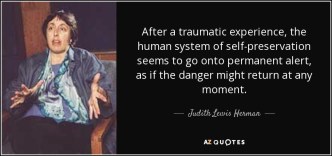
A “traumatizing” experience is one that is dangerous, scary or unexpected and can leave a person affected emotionally. There are many different kinds of experiences that can be considered traumatizing. Traumatic events can be caused by other people such as terror attacks, community violence (mugging, shooting, assault, bullying), or a very serious car accident. Traumatic experiences can also be natural. Examples of natural traumatic events include hurricanes, tornados, earthquakes, and fires. Regardless of what category of trauma an event falls under, each has the potential to leave a certain amount of impact on a person’s brain.

For most people, with time comes less feelings of trauma following an event. However, it is not unheard of for a traumatic experience to leave a person affected for the rest of their lives. In addition, everyone reacts and copes with trauma differently. A majority of people have similar symptoms following a traumatic event that include trouble sleeping or concentrating, constantly thinking about what occurred, and feeling anxious, sad or angry. These can last for several weeks or even months following a traumatic event. There are a few actions that a person can take that are known to be the healthiest ways to cope after experiencing something traumatic. These healthy coping mechanisms include, but are not limited to, the following:

  • Avoiding drugs and alcohol at all costs
  • Spending time around loved ones or supportive people in your life that you trust
  • Maintaining normal daily routines (eating, exercising, sleeping)
  • Staying active! The more you have to keep your mind preoccupied, the less time you have to be consumed by negative thoughts about the event

If you or someone you know has experienced a traumatic event, the licensed psychologists, psychiatrists, psychiatric nurse practitioners, and psychotherapists at Arista Counseling & Psychotherapy can assist you. Contact our Paramus, NJ or Manhattan, NY offices respectively, at (201)-368-3700 or (212)-722-1920 to set up an appointment. For more information, visit us at http://www.counselingpsychotherapynjny.com


Your Brain on Stress

By: Stephanie Osuba

Our brain has an automatic response to stress located in the amygdala, an almond sized structure in our brain that regulates emotion. Once a threat is perceived, the amygdala releases a number of hormones – adrenaline, cortisol, and norepinephrine – to prepare for the “fight or flight” response. This is all well and good for physical threats, but what about interpersonal threats? Threats that are far more complex that need an actual solution rather than simply running away. That’s when your prefrontal cortex comes into play as it handles all of the executive function in your brain and allows you to think critically about situations. This way you can learn how to deliberately take a step back and think about how you are going to handle the stressor. So instead of letting your emotions dictate when you are angry with your significant other, dealing with rude customers, or have one too many, here are some ways you can learn to manage your stress in a constructive way:

  • Take a Breath: Calm things down and take deep breaths. This clears your head long enough for you to regain control of your emotions and let your prefrontal cortex get onboard. Once you do that, you can start critically thinking about what to do with your stressor.
  • Practice Mindfulness: Mindfulness is the act of being in the present and being aware of your surroundings and the social context you are in. By asking yourself, “why am I feeling angry?” or “is saying this mean thing the best thing to do right now?” you can stop yourself from acting out in a way that you might regret.
  • Focus on What You Can Control: Some situations allow room for you to intervene, and others do not. Focus your energy on aspects you can anticipate, while at the same time mindfully accepting the aspects that you cannot.
  • Broaden Your View: When the amygdala gives off negative emotions due to the stressor, the anxiety usually narrows your point of view and drives you to find the quickest solution to the problem. As we know, the fastest solution isn’t always the best and it prevents you from using the stressful opportunity to grow and learn from the situation and finding a creative solution.

As much as we would rather not have to deal with it, stress is part of our daily lives and learning how to manage it can give us the life skills to handle, relatively, any situation thrown at us.

Source: Greenberg, M., Ph.D. (2017, September 7). Five Secrets to a Stress-Proof Brain. Retrieved from https://www.psychologytoday.com/us/blog/the-mindful-self-express/201702/five-secrets-stress-proof-brain

If you or someone you know is experiencing psychological distress due to stress, please contact our psychotherapy/psychiatry offices in New York or New Jersey to talk to one of our licensed professional psychologists, psychiatrists, psychiatric nurse practitioners, or psychotherapists at Arista Counseling & Psychotherapy. Contact our Paramus, NJ or Manhattan, NY offices respectively, at (201) 368-3700 or (212) 722-1920 to set up an appointment. For more information, please visit http://www.counselingpsychotherapynjny.com/.

Binge Eating Disorder

Binge Eating Disorder

By: Gisela Serrano

Bing Eating Disorder is a relatively new disorder that was only recently added to the DSM-5 in 2013. So, what exactly is Binge Eating Disorder? According to the American Psychiatric Association, Binge Eating Disorder is “characterized by recurring episodes of eating significantly more food in a short period of time than most people would eat under similar circumstances, with episodes marked by feelings of lack of control. Someone with binge eating disorder may eat too quickly, even when he or she is not hungry.” BED is one of the most common eating disorders and research shows that over 50% of people who suffer from BED do not seek or receive treatment. Binge eating disorder can affect just about anyone regardless of race, sex, or age. Most of those who suffer from Binge Eating Disorder are overweight or obese, but not all. Some sufferers actually appear perfectly healthy with regard to their weight. Those who suffer from BED experience extreme shame and guilt for the amount that they eat in such short periods of time. They understand that it is not healthy, but they feel it is almost impossible to change their ways. This is why those who suffer from BED prefer to eat alone rather than feeling ashamed and embarrassed in front of others. Someone who is not well informed on the disorder may not understand and, therefore, is quick to judge and disapprove or make nasty and unnecessary comments to the sufferer. According to the National Eating Disorders Association, binge eating episodes are associated with three or more of the following:

  • Eating much more rapidly than normal
  • Eating until feeling uncomfortably full
  • Eating large amounts of food when not feeling physically hungry
  • Eating alone because of being embarrassed by how much one is eating
  • Feeling disgusted with oneself, depressed, or very guilty after overeating

Binge Eating Disorder is a serious disorder that affects normal, everyday people. If you feel as though you or a loved one might be suffering from this disorder, seeking treatment would be best as it is not always easy to do on one’s own. You can contact Arista Counseling & Psychotherapy at our office in Paramus, NJ at (201) 368-3700 or our Manhattan location at (212) 722-1920 to see how our services and approaches can help you or a loved one treat your disorder. You can also visit our website http://www.counselingpsychotherapynjny.com/ for more information.

Resources:

https://www.nationaleatingdisorders.org/blog/new-dsm-5-binge-eating-disorder

https://www.nationaleatingdisorders.org/sites/default/files/ResourceHandouts/InfographicRGB.pdf

Persistent Depressive Disorder (Dysthymia)

Persistent Depressive Disorder (Dysthymia)

By: Gisela Serrano

Although Major Depressive Disorder (MDD) is the most commonly diagnosed depressive disorder, Persistent Depressive Disorder (PDD), also known as Dysthymia, is the second most common diagnosis. PDD is known to be mild and less severe than MDD, however, it is more chronic – that is, it is longer-lasting and recurring.

When diagnosing a patient with PDD, it must be ruled out that the symptoms the patient is experiencing cannot be better explained by a psychotic disorder or attributed to substance abuse. The symptoms must also cause distress to the patient and interfere or cause disturbances in their everyday life. Patients experience a “low” mood and feel down for most of the day, for a majority part of the time than not, for at least two years or more.  The patient cannot be without symptoms for more than two months; otherwise, he or she cannot be diagnosed with PDD.

As listed in the DSM-5, patients must experience two or more of the following symptoms, along with depressed symptoms, to receive a medical diagnosis of PDD:

  • Poor appetite or overeating
  • Insomnia or hypersomnia
  • Low energy or fatigue
  • Low self-esteem
  • Poor concentration or difficulty making decisions
  • Feelings of hopelessness

Treatments for Persistent Depressive Disorder include talk therapy or medication such as antidepressants and Selective Serotonin Reuptake Inhibitors (SSRIs) which increases the levels of serotonin in the brain. If you feel like you might be suffering from Persistent Depressive Disorder, it is important that you seek professional help as this disorder is highly treatable. At Arista Counseling & Psychotherapy center, we have qualified professionals that may be able to help you. You can reach us at our office in Paramus, NJ at 201-368-3700 or visit our website https://www.counselingpsychotherapynjny.com/ for more information.