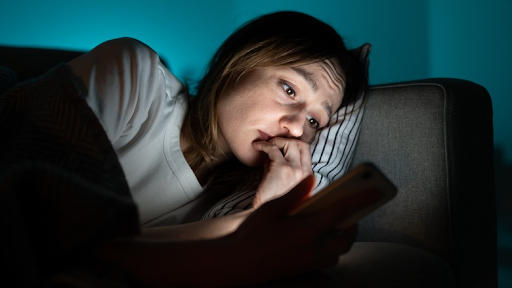
Wild Introvert: Could You Be One?

Wild Introvert: Could you be one?

By Rachel Wang

Everyone knows what it means to be either introverted or extroverted: You either gain energy from being alone, or from being around others in social settings. However, not all introverts are the same, and not all extroverts are the same. Some people may fall under what’s known as a “wild introvert”, an unofficial term coined by Dr. Scott Barry Kaufman to describe someone who is both introverted and scores extremely high in openness to experience. 

Wild introverts have a strong inclination toward adventure, novelty, and sensory experiences, often needing time to recharge after engaging in these activities. This concept highlights that introversion is not necessarily synonymous with shyness or a lack of engagement with the world; rather, simply a preference for certain types of stimulation and social interaction. These stimuli are linked to dopamine which explains why research has found that extroverts get so energized and excited from positive social attention. Introverts, on the other hand, just don’t get as worked up about that. And in the case of the wild introvert, they might get energized or excited over other, non-social stimuli, such as those related to intellect, imagination, and new ideas.

So how does one tell if one is a wild introvert or not? If you agree with the following statements, you might just be a wild introvert:

  • I don’t tend to show enthusiasm in social situations, but I light up when the topic changes to one of my genuine interests.
  • On the outside, it may seem like I’m boring and vanilla, but inside my head, there lies a rich, imaginative world.
  • I have a ravenous desire to learn novel and complex things, but I can’t stand events where I am forced to network and meet lots of new people.
  • I generally prefer quiet and low stimulation, but when I feel comfortable/safe, I am a big sensation seeker.

Whether you’re an introvert, extrovert, or wild introvert, the key to being happy is self-acceptance. The best thing you can do for yourself is to live life on your own terms, whether that’s through quiet solitude, partying, or getting lost in a good book.

If you or someone you know is struggling with mental health, please contact our psychotherapy offices in New York or New Jersey to talk to one of our licensed professional psychologists, psychiatrists, psychiatric nurse practitioners, or psychotherapists at Arista Counseling and Psychotherapy. Contact our Paramus, NJ, or Manhattan, NY offices respectively, at (201) – 368-3700 or (212)-722-1920 to set up an appointment. For more information, please visit https://www.counselingpsychotherapynjny.com/

Source: Are You a Wild Introvert? | Psychology Today

AI Therapy: Why Therapists Won’t Be Replaced by AI Anytime Soon

AI Therapy: Why Therapists Won’t Be Replaced by AI Anytime Soon

By: Rachel Wang

With the rapid growth of AI, many job industries are at risk of being overtaken by automated systems. Certain jobs have already begun to be replaced by AI, such as data entry clerks, telemarketers, and fast food workers, due to the repetitive nature of tasks involved. At some restaurants, for instance, your food might no longer be brought to you by a human server, but instead by a robot server on wheels. With the increasing shift to an AI-powered society, what is the likelihood of psychotherapy being replaced by automation? The answer, actually, is quite low.

Jobs at higher risk of being replaced by AI are those marked by predictable, repetitive tasks, a low need for creativity/complexity, and limited interpersonal skills or emotional intelligence required. Therapy is inherently relational—it involves reading between lines, picking up on subtle shifts in tone, body language, silence, etc. Thus, high emotional intelligence and interpersonal capacity is a must, ruling it out from being completely overtaken by AI. While AI may simulate empathy with words, people can often sense when something feels inauthentic or “off”; no client would choose an automated script over a genuine, empathetic response. 

Moreover, there is an element of therapy that requires being “seen” in the presence of another human being that AI simply can’t replicate. People want to be seen and validated by another human, not just fed advice by a machine. This is also supported by neuroscience, which found that mirror neurons and polyvagal theory suggest that nervous systems “synchronize” in therapeutic relationships, causing the client to feel safe and co-regulated in the presence of the therapist. Therapeutic relationships also require a high level of trust/vulnerability when it comes to sharing things like trauma, grief, abuse, etc., which is difficult to build with a machine that has no emotions. There is often a fear of being judged, misinterpreted, or even surveilled when sharing personal details with AI that makes human therapists a necessity.

While it’s easy to get caught up talking to a chatbot that always responds, true person-to-person therapy involves a uniquely intimate bond that can’t be replicated by a machine. For those of you with a therapist whom you see regularly, we encourage you to recognize and appreciate all the support and progress you’ve made. For those of you without one, we at Arista Counseling are always available to help you find the mental health resources you need.

If you or someone you know is struggling with mental health, please contact our psychotherapy offices in New York or New Jersey to talk to one of our licensed professional psychologists, psychiatrists, psychiatric nurse practitioners, or psychotherapists at Arista Counseling and Psychotherapy. Contact our Paramus, NJ, or Manhattan, NY offices respectively, at (201) – 368-3700 or (212)-722-1920 to set up an appointment. For more information, please visit https://www.counselingpsychotherapynjny.com/

Schizophrenia: “The Collected Schizophrenias” – A Glimpse into the Mind of a High-Functioning Schizophrenic

Schizophrenia: “The Collected Schizophrenias” – A Glimpse into the Mind of a High-Functioning Schizophrenic

By: Rachel Wang

From the outset of Esme Weijun Wang’s writing, she held my attention and respect as a first-time reader of her work: Asian American, graduated from Stanford with a 3.99 GPA, highly accomplished author. As she described her struggle with various mental illnesses including schizoaffective disorder, Lyme disease, and Cotard’s syndrome, I was struck by how, in spite of all of these challenges, she was still able to lead a rich, successful, and relatively happy life. Having a mental illness does not take away from you as a person; rather, it stands as a testament to what you have undergone and the strength of your character.

At the beginning of her novel, Wang points to a 2013 Slate article titled “Schizophrenic Is the New Retarded” by neuroscientist Patrick House, in which House notes that schizophrenia is closely associated with qualities of being volatile and contradictory, characterizing a range of personas from a person with split personality disorder to a serial killer. Wang uses this article to convey a main theme that recurs throughout the novel: When it comes to “socially frowned upon” disorders like schizophrenia, being diagnosed is something of a death sentence in itself. All aspects revolve around this heavy medical label that you have become; even if you recover and lose the diagnosis, those who know you will feel like they don’t because of this cryptic illness, and you will forever be considered an outcast in society.

When it comes to dealing with high-risk mental disorders, a person must be judged on whether they pose not only a danger to themself, but to society as well. As someone who was sent to a mental facility against her will, Wang believes that forcing treatment onto someone under the guise of “doing what’s best for them” is a serious violation, stripping the individual of the basic right of autonomy. She quotes Plumadore, a renowned figure in the mental health community, on this subject: “We have the ultimate decision about what we’re going to allow into our bodies, what we’re not, and the decisions that we make about our own lives.” This view reappears later in the novel when Wang describes her experience with being 5150’d (involuntary psychiatric commitment), which she concludes with the final, depressing thought: “For those of us living with severe mental illness, the world is full of cages where we can be locked in” (110).

From lifelong societal disapproval to deterioration of health, schizophrenia is undoubtedly a plague to those who bear it, causing much suffering and threatening to overtake one’s whole life. The perpetual overshadowing of this type of illness leads less to the perspective “What will this affect?” and more to simply thinking “What won’t this affect?” or “What percent of my life can I realistically expect to keep for myself?” In spite of all her doubts, Wang was able to prove that she was larger than her disorders—not only achieving her dream of becoming an accomplished writer, but going further to create a powerful work of literature based on her personal struggles, offering inspiration to those struggling with mental illnesses everywhere.

If you or someone you know is struggling with mental health, please contact our psychotherapy offices in New York or New Jersey to talk to one of our licensed professional psychologists, psychiatrists, psychiatric nurse practitioners, or psychotherapists at Arista Counseling and Psychotherapy. Contact our Paramus, NJ, or Manhattan, NY offices respectively, at (201) – 368-3700 or (212)-722-1920 to set up an appointment. For more information, please visit https://www.counselingpsychotherapynjny.com/

Doomscrolling: How Mindless Scrolling Impacts Adolescent Mental Health

Doomscrolling: How Mindless Scrolling Impacts Adolescent Mental Health

By: Rachel Wang

In today’s age, social media scrolling has become increasingly common among the young adult population. Among my college friend group, words like “brainrot” and “doomscrolling” are a regular occurrence, and while often played off as a joke, they also speak to the unhealthy tendency to spend copious amounts of time online. With teenagers spending an average of 8 hours and 39 minutes on screens daily, it’s no wonder that the impact of cell phone use and social media has become a huge concern for teens and parents. 

 On the topic of doomscrolling, TikTok is a major subject of discussion. Compared to other platforms, TikTok’s interface facilitates instantaneous content consumption and creation, and was one of the first platforms to generate a customized feed of audiovisual content tailored for users based on their perceived preferences via the app’s algorithm. In other words, it provides users with endless short videos specifically curated to what the user finds most interesting, making it the perfect addictive app for people with short attention spans. However, TikTok’s compelling interface comes at a cost for its users. It has been shown that a greater number of hours spent scrolling on TikTok—aka passive use—predicted lower life satisfaction, while the number of videos posted—aka active use—predicted higher life satisfaction (Wu et al., 2021). Notably, only about 25% of all TikTok users create 98% of all publicly accessible videos, while nearly half of users (48%) have never posted a video, indicating that the majority of users consume content passively, known as “lurking” (Smith 2024). This means that, for the majority of TikTok users who use the app passively, a greater number of hours spent scrolling predicts lower life satisfaction, making higher screen times a very real cause for concern that is worth addressing.

At the end of the day, social media addiction and doomscrolling are still relatively new concepts, which means research in these areas is still wanting. With the average teenager spending over one-third of their lives on a screen—potentially spending more time on their phones than sleeping—the need for more research in this subfield is self-explanatory. Perhaps, instead of normalizing terms like “doomscrolling” and “brainrot”, we should be funding social media research and encouraging one another to self-reflect and nurture our minds with healthier, real-life habits.

If you or someone you know is struggling with mental health, please contact our psychotherapy offices in New York or New Jersey to talk to one of our licensed professional psychologists, psychiatrists, psychiatric nurse practitioners, or psychotherapists at Arista Counseling and Psychotherapy. Contact our Paramus, NJ, or Manhattan, NY offices respectively, at (201) – 368-3700 or (212)-722-1920 to set up an appointment. For more information, please visit https://www.counselingpsychotherapynjny.com/

sources: Two Years Into the Pandemic, Media Use Has Increased 17% Among Tweens and Teens | Common Sense Media, https://doi.org/10.1037/ppm0000292, TikTok mostly passive consumption platform dominated by active posters, study shows

Pets: Are they good for mental health?

Pets: Are they good for mental health?

By: Rachel Wang

Pets are a beloved member of every household that owns them. Whether it be a fluffy cat, large dog, or tiny fish, they almost always make the lives of those around them better in some way.

From a therapeutic standpoint, one might wonder: Are pets good for mental health? Research-backed sources say yes. According to the National Institutes of Health, interacting with animals has been shown to decrease levels of cortisol (stress hormone) as well as lower blood pressure. Furthermore, pets may help to reduce loneliness, increase feelings of social support, and boost mood. Owning certain pets might also encourage higher levels of physical activity—for example, walking your dog—which has been proven to reduce stress and boost mood.

Dogs especially have the potential to assist in more specialized cases of mental health. For instance, therapy dogs have been used to help reduce patients’ stress and anxiety levels in hospitals and nursing homes. A study also found that dogs may possibly aid in the lives of children with ADHD; however, more research is needed to make a substantiated claim.

Finally, if the above is not enough to prove the uplifting effects of owning a pet, an American Psychiatric Association poll found that 86% of pet owners said their pets have an overall positive impact on their mental health, with dog and cat owners being the most likely to say so. People don’t just love their pets because they’re cute—they appreciate them for being a constant source of warmth and companionship that brightens even the worst days.

If you have a pet, don’t forget to give them a hug today (or some extra fish food)! If you don’t have a pet but have the resources to get one, it could be worth thinking about—you might be surprised by how much a furry companion can brighten your days.

If you or someone you know is struggling, please contact our psychotherapy offices in New York or New Jersey to talk to one of our licensed professional psychologists, psychiatrists, psychiatric nurse practitioners, or psychotherapists at Arista Counseling and Psychotherapy. Contact our Paramus, NJ, or Manhattan, NY offices respectively, at (201) – 368-3700 or (212)-722-1920 to set up an appointment. For more information, please visit https://www.counselingpsychotherapynjny.com/

Sources: The Power of Pets | NIH News in Health, Psychiatry.org – Poll of US Pet Owners