Stress: How your financial situation could be affecting your life

Stress: How your financial situation could be affecting your life

By: Diane Ulloa
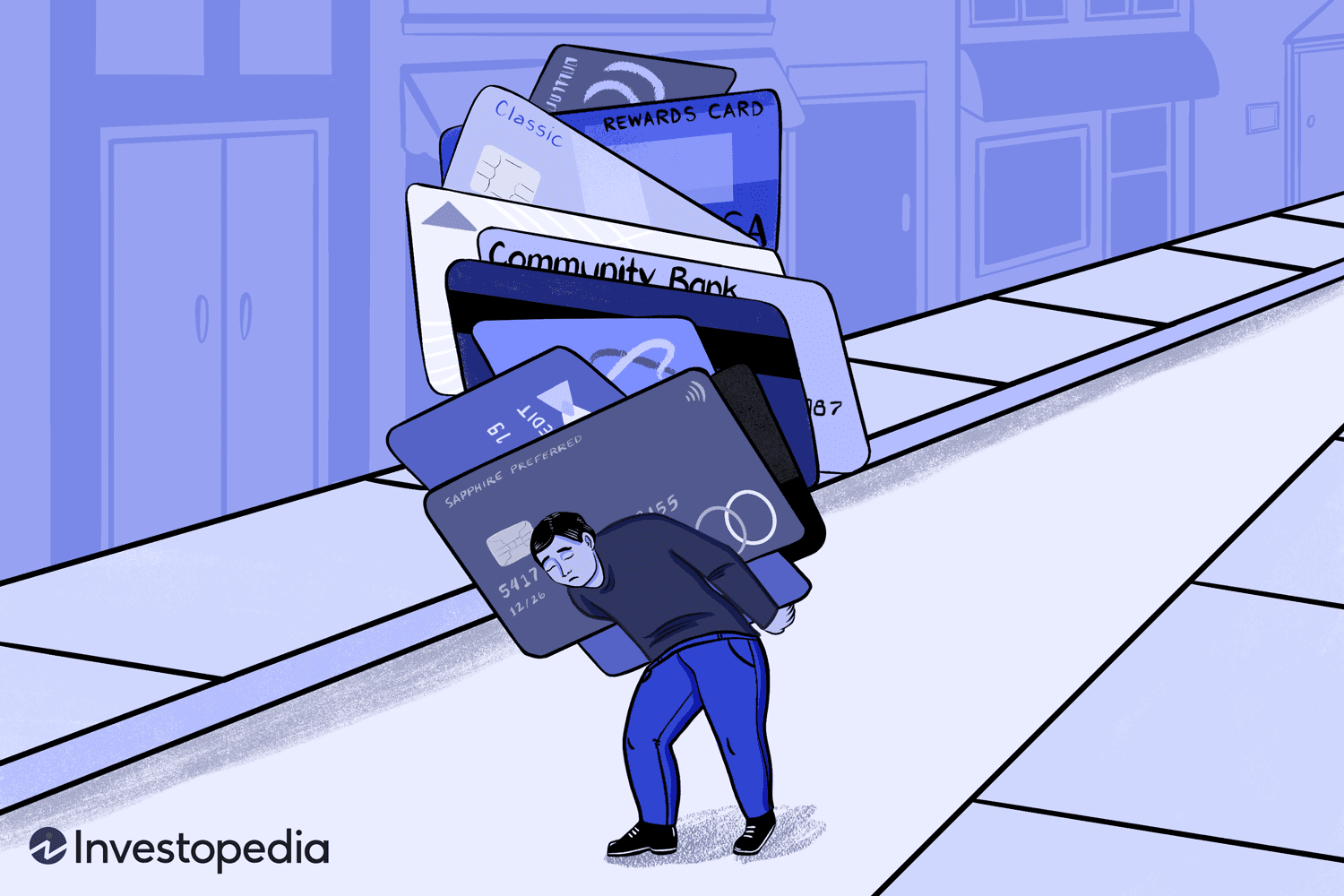
In the past two decades alone, student debt and loans have reached approximately $1.6 trillion which slightly surpassed credit card debt in America which stands at $1.03 trillion in the second quarter of 2023 according to the Federal Reserve Bank of New York. “In addition to poverty, financial debt and loans are significantly associated with increased psychological distress and poor mental health status.” (From: Ryu S, fan L. The Relationship Between Financial Worries and Psychological Distress Among U.S. Adults) As financial debt accumulates, a person may find themselves withdrawing from hanging out with friends or family and becoming avoidant of places, people, and even their financial struggles. If someone continuously avoids their bills they continue to accumulate and seeing the amount of the accumulated bills can take a serious toll on a person’s mental health.

Other problems may also emerge when someone is experiencing anxiety due to financial stress, these could include poor sleeping habits, overspending, avoidance, and poor eating habits. Someone that has a spending problem or someone who is in financial worry would benefit from speaking to a therapist who would help them cope with their unhealthy habits in better ways. A therapist can help in creating a patient budget and manage their money in better ways including a personalized budgeting plan or setting up financial goals. A therapist can also help individuals identify the underlying causes of their financial stress and develop strategies for managing it. Along with anxiety and stress, financial worry can cause feelings of shame and guilt and a therapist is able to provide a safe, non-judgmental space to explore these feelings and how to develop strategies to overcome them. A person may also experience difficulty in communicating their financial struggles and/or negative beliefs and behaviors related to money with their loved ones. A therapist can aid in more effective communication with loved ones about financial struggles and challenge negative beliefs related to money by developing more positive patterns of thought and behavior related to finances. Additionally, an individual who suffered financial trauma such as bankruptcy, foreclosure, or identity theft may benefit from therapy in order to address the emotional and psychological impact of these experiences.

If you or someone you know is struggling with their mental health, or has anxiety/stress please contact our psychotherapy offices in New York or New Jersey to talk to one of our licensed professional psychologists, psychiatrists, psychiatric nurse practitioners, or psychotherapists at Arista Counseling & Psychotherapy. Contact our Paramus, NJ or Manhattan, NY offices respectively, at (201) 368-3700 or (212) 722-1920 to set up an appointment. For more information, please visit http://www.counselingpsychotherapynjny.com/

Sources

https://www.lendingtree.com/credit-cards/credit-card-debt-statistics/

Ryu S, Fan L. The Relationship Between Financial Worries and Psychological Distress Among U.S. Adults. J Fam Econ Issues. 2023;44(1):16-33. doi: 10.1007/s10834-022-09820-9. Epub 2022 Feb 1. PMID: 35125855; PMCID: PMC8806009.

Types Of Therapy For Financial Stress And Money Issues

mantracare.org

Bulimia and Binge Eating Disorder: Similarities and Differences

Bulimia and Binge Eating Disorder: Similarities and Differences

By: Diane Ulloa
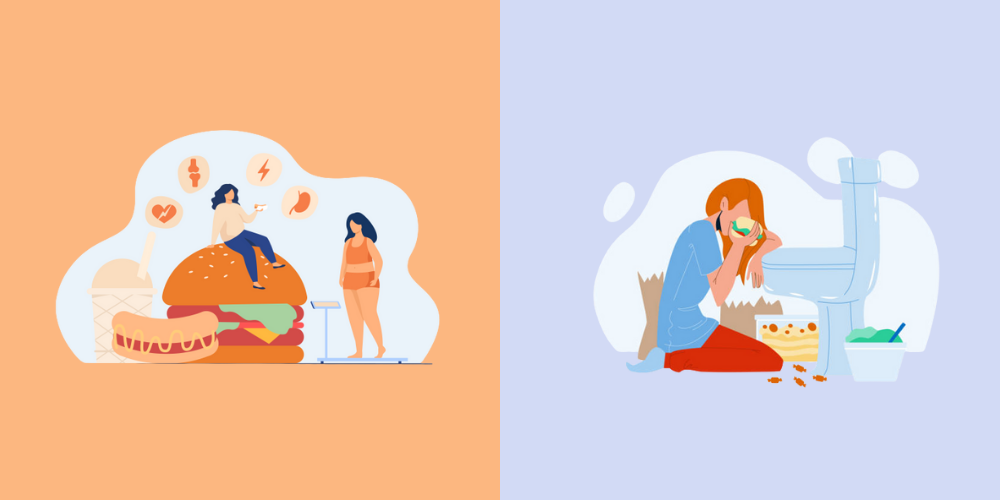
Bulimia as categorized by the DSM V under bulimia nervosa is a diagnosis assigned to individuals who recurrently overeat and use inappropriate measures to prevent weight gain afterwards, such as purging, fasting or exercising excessively. A criterion would include, “Recurrent inappropriate compensatory behaviors in order to prevent weight gain such as self-induced vomiting; misuse of laxatives, diuretics, or other medications; fasting or excessive exercise” (National Library of Medicine).
There are 5 criterion for binge eating disorder that include:

  1. Eating in a discrete period of time (within 2 hour periods), an amount of food that is larger than most people would eat in a similar period of time under similar circumstances. A feeling that one cannot stop eating or control what or how much one is eating. . Eating until feeling uncomfortably full, eating large amounts of food when not feeling physically hungry.
  2. Recurrent inappropriate compensatory behaviors in order to prevent weight gain such as self-induced vomiting; misuse of laxatives, diuretics, or other medications; fasting or excessive exercise
  3. The binge eating and inappropriate compensatory behaviors occur, on average, at least twice a week for 3 months.
  4. Self-evaluation is unjustifiably influenced by body shape and weight.
  5. The disturbance does not occur exclusively during episodes of anorexia nervosa.

Both have the shared behavior of binge eating food, but what is binge eating? When someone cannot control their eating and they eat much more food than they would normally eat in one sitting often to the point of major discomfort. Oftentimes binging happens when one is not hungry and many report binge eating home alone, or at night when no one is up or around to see them. People may binge eat as a coping mechanism when they are stressed, anxious, bored, or experiencing any other negative emotion. For those struggling with bulimia, binging and then purging can be a way of coping with those negative emotions. For someone who struggles with binge eating disorder, binging can also be a way to self-soothe or distract in the presence of very difficult emotions. Many people who engage in these behaviors have feelings of social isolation and anxiety, and many have reported feeling hopeless and helpless.
What’s the difference? The main difference is that bulimia nervosa is characterized by purging after binge eating. While everyone has very different reasons and experiences, often those who struggle with bulimia also struggle with gaining weight and often have a distorted body image. As opposed to those with binge eating disorders who may feel uncomfortable in their bodies, but do not have as strong preoccupation with their body image, or weight, as those with bulimia.  

If you or someone you know is struggling with their mental health, bulimia nervosa, or binge eating disorder please contact our psychotherapy offices in New York or New Jersey to talk to one of our licensed professional psychologists, psychiatrists, psychiatric nurse practitioners, or psychotherapists at Arista Counseling & Psychotherapy. Contact our Paramus, NJ or Manhattan, NY offices respectively, at (201) 368-3700 or (212) 722-1920 to set up an appointment. For more information, please visit http://www.counselingpsychotherapynjny.com/

Sources:

Substance Abuse and Mental Health Services Administration. DSM-5 Changes: Implications for Child Serious Emotional Disturbance [Internet]. Rockville (MD): Substance Abuse and Mental Health Services Administration (US); 2016 Jun. Table 20, DSM-IV to DSM-5 Bulimia Nervosa Comparison. Available from: https://www.ncbi.nlm.nih.gov/books/NBK519712/table/ch3.t16/
Berkman ND, Brownley KA, Peat CM, et al. Management and Outcomes of Binge-Eating Disorder [Internet]. Rockville (MD): Agency for Healthcare Research and Quality (US); 2015 Dec. (Comparative Effectiveness Reviews, No. 160.) Table 1, DSM-IV and DSM-5 diagnostic criteria for binge-eating disorder. Available from: https://www.ncbi.nlm.nih.gov/books/NBK338301/table/introduction.t1/

https://www.centralcoasttreatmentcenter.com/blog-1/bulimia-v-binge-eating-disorder

PTSD and Memory Loss

PTSD and Memory Loss

By: Diane Ulloa

PTSD causes feelings of intense, disturbing thoughts and feelings related to their experience that last long after the traumatic event has ended. People with PTSD may relive their traumatic event(s) through flashbacks or nightmares and they may feel sadness, fear, or anger. They may also feel detached or estranged from other people (American Psychiatric Association). PTSD also has the ability to cause memory loss whether it be short-term or long-term, both can be affected. Four steps to fix PTSD related memory loss would be:

  1. Get treatment, therapy and medication are two of the most common treatment options for PTSD. Medication and therapy such as Cognitive Behavioral Therapy [CBT] or prolonged exposure therapy have been shown to be effective in managing PTSD.
  2.  Stay Active. By staying physically active and mentally active through brain games or learning new skills, one can help keep their brain sharp and active.
  3. Prioritize Sleep, good sleep appears to be essential for memory consolidation and processing.
  4. Use Memory Aids, which are tools that are designed to help accommodate people who experience memory difficulties which could include calendars, notepads, and alarm clocks. (healthline.com)

The types of behavioral therapy that can aid in this memory loss and other symptoms caused by PTSD are:

  • Cognitive Therapy: A type of talk therapy that helps people with PTSD recognize the cognitive patterns that are keeping them stuck, this is often paired with exposure therapy.
  • Exposure Therapy: Helps people with PTSD safely face both situations and memories that they find frightening so they can learn to cope with them effectively. This kind of therapy can be particularly helpful for flashbacks and nightmares.
  • Eye Movement Desensitization and Reprocessing (EMDR): Combines exposure therapy with a series of guided eye movements that help you process traumatic memories and change how people with PTSD react to them. (Mayoclinic.org)

Primary treatment is psychotherapy, but medication could also be prescribed as needed. Medication may include antidepressants, anti-anxiety medications, and prazosin which has the ability to reduce or suppress nightmares in some people with PTSD.

If you or someone you know is struggling with their mental health and/or PTSD (memory loss) please contact our psychotherapy offices in New York or New Jersey to talk to one of our licensed professional psychologists, psychiatrists, psychiatric nurse practitioners, or psychotherapists at Arista Counseling & Psychotherapy. Contact our Paramus, NJ or Manhattan, NY offices respectively, at (201) 368-3700 or (212) 722-1920 to set up an appointment. For more information, please visit http://www.counselingpsychotherapynjny.com/

Sources:

https://www.psychiatry.org/patients-families/ptsd/what-is-ptsd#:~:text=People%20with%20PTSD%20have%20intense,or%20estranged%20from%20other%20people.

https://www.healthline.com/health/mental-health/memory-loss-and-ptsd#causation

https://www.mayoclinic.org/diseases-conditions/post-traumatic-stress-disorder/diagnosis-treatment/drc-20355973#:~:text=For%20PTSD%2C%20cognitive%20therapy%20often,helpful%20for%20flashbacks%20and%20nightmares.